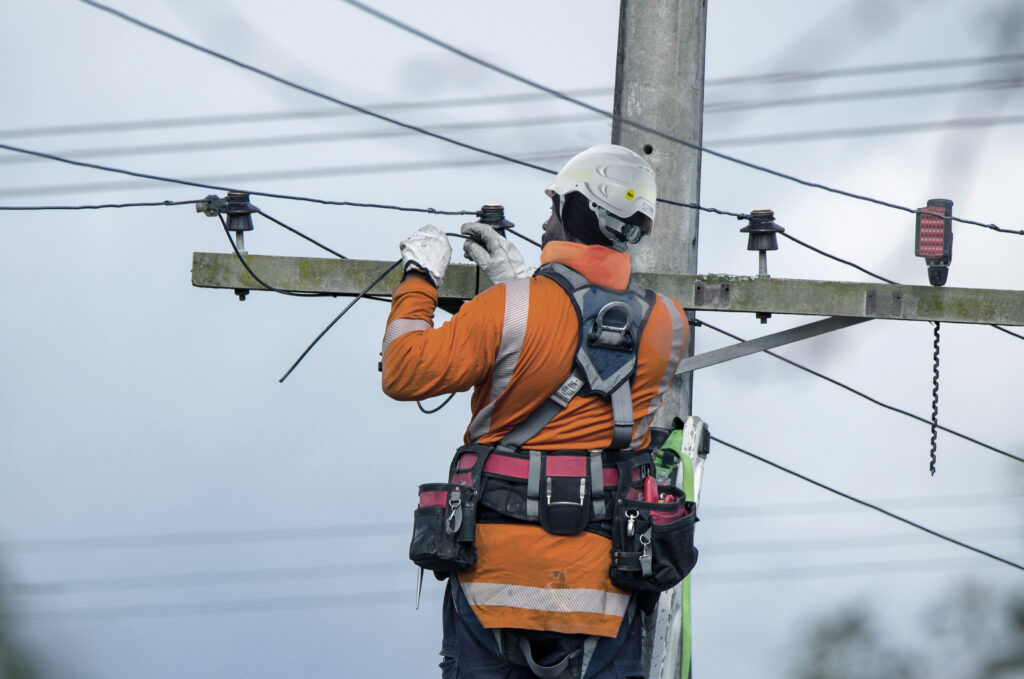
Falls from height remain one of the leading causes of serious injury and fatality across construction, utilities, and industrial environments.
And while most safety strategies focus on preventing the fall itself, there’s a critical question that often gets overlooked:
What happens when the fall doesn’t go to plan?
Not all impacts are the same
Traditional industrial safety helmets are designed primarily for top-down impact – protecting the wearer from falling objects.
But in a fall from height, the risk profile changes.
Impacts are more likely to be:
- Side or lateral
- Rearward during a slip or swing
- Multiple points of contact during descent
In these scenarios, a helmet designed purely for vertical impact protection may not provide the level of coverage required.
The limitation of ‘standard’ protection
Helmets certified to EN 397 play a vital role on site. But they are not specifically designed for:
- Dynamic movement at height
- Climbing or access work
- Situations where helmet retention is critical
- Increased risk of lateral impact
In other words, they meet the standard – but that standard wasn’t written for every environment.
Why working at height demands a different approach
When operating at height, PPE needs to do more than protect – it needs to stay in one place and perform under dynamic, unpredictable conditions.
Unlike ground-level risks, falls from height introduce lateral, rear and multiple-impact scenarios, where helmet stability becomes just as critical as impact resistance.
That’s why relying solely on traditional helmet standards, such as EN 397, may not be enough.
Instead, it’s important to use helmets designed to meet EN 12492 – the standard developed specifically for climbing and working at height.
This standard places greater emphasis on:
- Secure retention systems to keep the helmet in place during a fall
- Protection from side, front and rear impacts
- Performance under dynamic movement and positioning.
Because in these environments, a helmet that shifts, loosens or comes off mid-incident isn’t providing protection when it’s needed most.
Designed for the reality of working at height
Specialist helmets are built around how incidents actually happen – not just how products are tested.
Working at height, built for the real world
At Centurion working at height helmets are designed to meet the demands of dynamic environments, with a focus on secure fit, all-round protection and all-day wearability.
Engineered to go beyond basic compliance, they’re built to perform when it matters most
Explore our working at height helmets